Industry context
Start with a credible organisational need and realistic constraints.
Synthetic Learning Simulations
SLS offers realistic, industry-informed practice to help rangatahi move beyond knowing something towards demonstrating how they think, collaborate, solve and communicate.
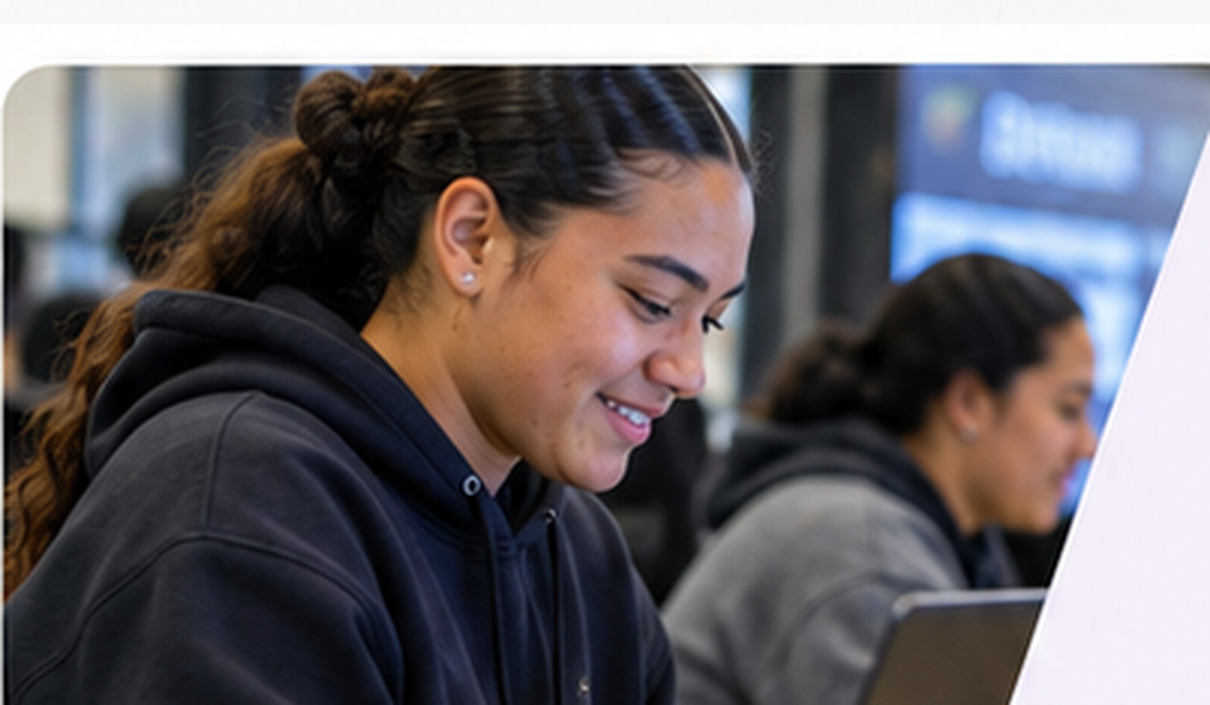
Learning through experience
In a synthetic environment, an industry-style scenario provides context: organisations, stakeholders, constraints, requirements and decisions. Learners have to apply technical knowledge alongside the human skills needed in a workplace.
Educators remain responsible for formal course assessments. Whenua Tech provides practice and mentorship, while NanoTech IT assesses technical project evidence against agreed SLS credential criteria.
SLS in practice
Start with a credible organisational need and realistic constraints.
Teams investigate the problem, test options and develop a response.
Industry and educator guidance challenges assumptions and supports progress.
Learners present reasoning, outputs and lessons that can inform their next steps.
Try a simplified example
Explore three steps in a typical synthetic business challenge, from understanding a brief to making evidence-based decisions and receiving feedback.
A fictional organisation requests recommendations for a network improvement. The team receives a problem description, constraints and a client perspective. What must it clarify before designing a solution?
The team researches options, prioritises risks, tests assumptions and documents supporting evidence. Technical choices must address the client’s actual needs, not only what is easiest to build.
A mentor asks the team to demonstrate why a recommendation is fit for purpose, what evidence supports it and how it would communicate trade-offs to a stakeholder.
Digital credentials
Learners who complete an eligible SLS project and satisfy the assessment criteria can receive a digital Certificate of Industry Achievement. It recognises demonstrated project skills, not simply attendance.
Credential issuer
Issues the industry-project credential for eligible SLS achievements.
Industry partner & technical assessor
Reviews practical technical work and supporting evidence against the defined project criteria.
Digital issuance & verification
Provides the digital certificate, shareable badge and online verification details when an award is issued.
Make your mahi visible
Recipients can add the credential to LinkedIn's Licences & Certifications section, share the digital badge and include the unique verification link and ID on their CV. Employers can check what was recognised.
This is an industry-assessed SLS project credential, not an academic qualification, a vendor certification, independent accreditation or a guarantee of employment. Award eligibility depends on successful completion and assessment.
Practical learning · 2026
A 2026 mentoring engagement supported four project groups involving fourteen learners. The work spanned two technical focus areas and included realistic briefs, guidance and project presentations.
The Bridge stays first
SLS is one component of the wider Whenua Bridge. Mentorship, educator support, projects and the developing Pipeline create further connections between practice and real opportunities.
Our goal is to strengthen the path from learning to industry experience, not to market simulations as a replacement for real placements.
Educators + Industry + Rangatahi → Practical experience → Opportunities
Understand the Bridge →Be part of the bridge
Rangatahi, educators, industry partners, mentors and whānau all have a place in this kaupapa.